
In today’s globalized world, proficiency in English has become increasingly important. Early Childhood is a crucial stage for language development, and integrating English learning through play can significantly enhance children’s language skills and overall cognitive development. Let’s delve into why incorporating English through play is essential in Early Childhood education.
1.Engaging and enjoyable learning experience.
Play is a natural and enjoyable activity for children. When learning English through play, children are more likely to stay engaged and motivated. Educational games, songs, and interactive activities make language learning fun and interactive, creating a positive learning environment where children are eager to participate and explore.
2.Language acquisition in context.
Through play, children learn English in meaningful contexts. They use language to communicate with peers, negotiate roles in pretend play scenarios, and follow instructions during games. This contextual learning helps children understand the practical application of English and reinforces vocabulary and grammar in real-life situations.
3.Development of social and communication skills.
Play encourages social interaction and collaboration, providing opportunities for children to practice English in social settings. Whether they are playing a game, engaging in dramatic play, or working on a project together, children learn to communicate, share ideas, and express themselves effectively in English. These interactions promote the development of social and communication skills vital for success in later life.

4.Building confidence and fluency.
When children learn English through play, they feel less pressure and more confident to experiment with the language. They are more willing to take risks, try out new words and phrases, and make mistakes without fear of judgment. This confidence-building aspect of play helps children develop fluency and proficiency in English at an early age, laying a solid foundation for future language learning.
5. Holistic development.
Play-based English learning promotes holistic development by integrating language skills with other areas of development, such as cognitive, physical, and emotional development. Whether it’s following instructions in a game, solving puzzles, or expressing feelings through role-play, children engage in activities that stimulate multiple aspects of their development simultaneously.
6.Preparation for future success.
Proficiency in English opens doors to countless opportunities in education, career, and personal growth. By starting early with play-based English learning, children gain a head start in acquiring this valuable skill. They are better equipped to excel academically, communicate effectively in diverse settings, and adapt to an increasingly globalized world.

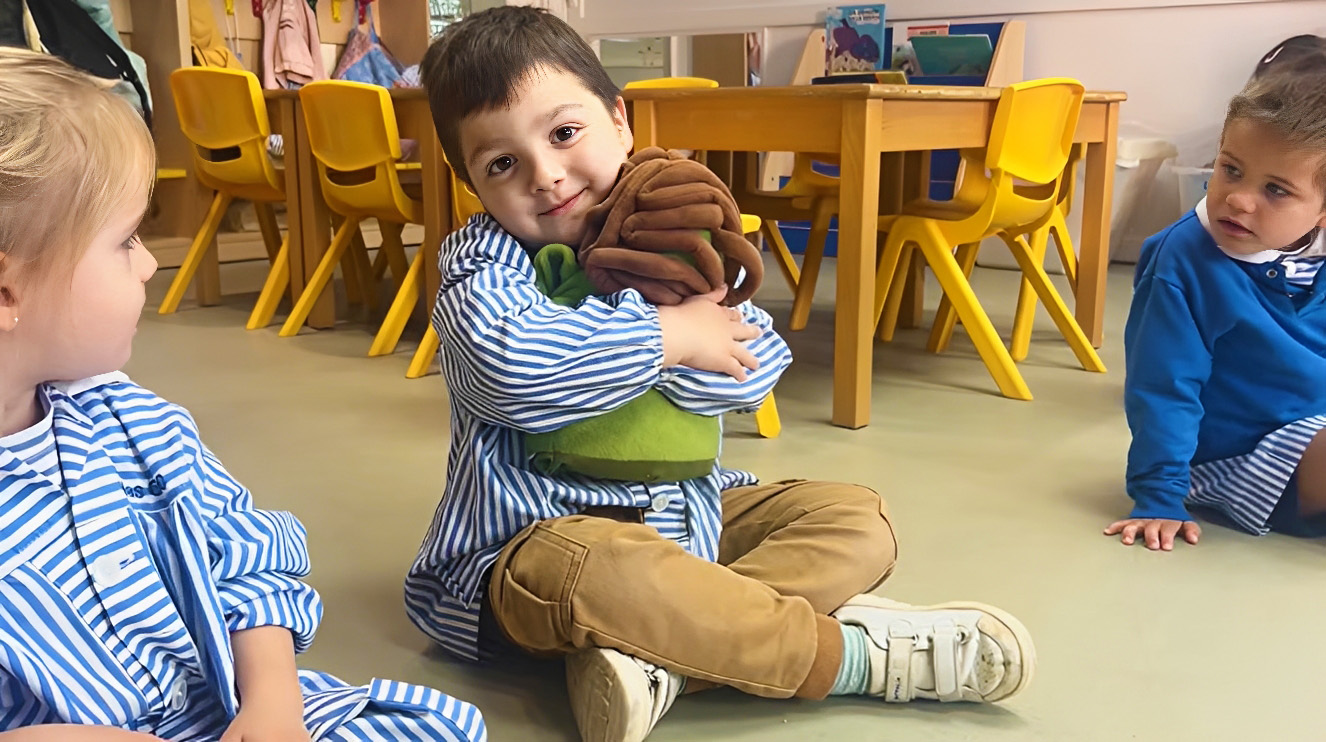
In conclusion, we can affirm that play is a crucial methodology for learning English in Early Childhood education. We play throughout the day at different times and in different settings, sometimes it’s free or guided play, individual or collective. Moreover, there are several reference teachers who perform the function of verbal modelling during these moments. Repetition and habit make some linguistic structures easily memorized, leading to complete understanding. After internalizing them, they are used automatically. Not forgetting that the motivation inherent in play facilitates its acquisition.
So…you know…Let’s play in English!!